
Embracing the Unscripted
Five Benefits from Playing Improvised Music

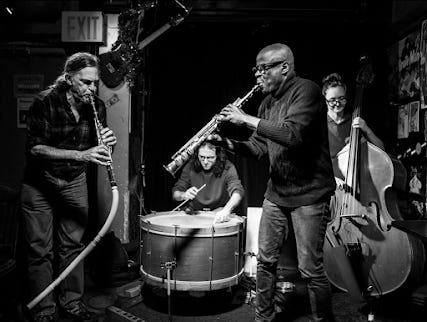
In recent years, I’ve found myself pulled, almost against my better judgment, toward improvised music. Not the polite, sandbox version, but the real thing: the kind that removes the guardrails and asks you who you are when the charts disappear. I come from straight-ahead jazz, where rhythm and harmony aren’t suggestions but law. Where time has gravity. Where form tells you when to speak and when to shut up. Improvised music offers none of that comfort. It hands you an empty room and says, Now do something with it.
This is a different terrain altogether. No preset harmony, agreed-upon pulse, or melodic roadmap. You invent the moment while standing inside it. That kind of freedom isn’t romantic. Far from it. Demanding is what it is. And while I’m reluctant to crown myself an “improviser” in the pure sense (titles should be earned, not declared), I hold deep respect for the musicians who live here daily, naked and accountable.
For players raised inside the grammar of hard bop, swing, or any tradition with rules, improvised music can feel like a hostile takeover. There’s no form to lean on, no practiced ii-Vs to rescue you when your ideas run dry. But buried inside that discomfort is a serious education. Improvised music doesn’t replace tradition—it interrogates it. And it offers benefits that carry back into every style worth playing.
Here are five.
1. You Learn to Stop Planning and Start Playing
Improvised music strips away the safety net. No roadmap. And definitely no “I’ll save this lick for the bridge.” Every sound is a decision made in real time. You learn quickly that preparation doesn’t mean prediction, it means presence. This kind of spontaneity isn’t reckless; it’s disciplined alertness. Once you develop it, your playing in structured settings gets sharper, leaner, and more alive. You stop reciting and start responding.
2. Listening Becomes Non-Negotiable
In traditional settings, musicians can hide. Roles are assigned.
