
Killing It Isn’t the Same as Making Music
Why the greatest musicians don't make you want to quit—they make you want to play.

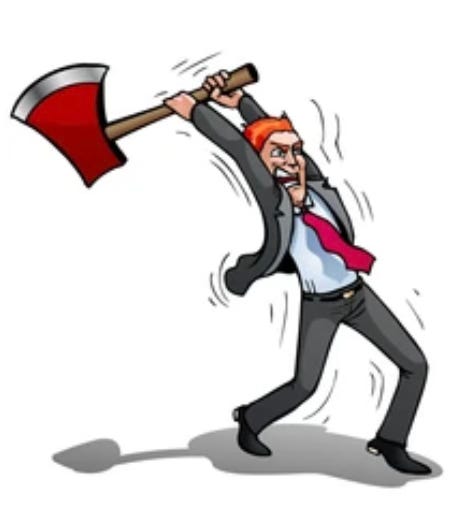
A colleague once told me about a saxophonist he had been performing with who “played so much shit” it intimidated him to the point that he didn’t even want to play anymore. The story was told with a kind of admiration, as though frightening your fellow musicians into silence were a badge of honor.
That always struck me as a strange standard of excellence.
If the musicians around you feel smaller after you play instead of larger, chances are you’re drinking from the wrong musical well. Either that, you’re offering a more corrosive kind of drink.
There are a couple of ways to look at this.
First, consider the curious emotional divide that exists in music. When we hear certain musicians play, something inside us opens up. We leave the room thinking, “Yes, this is possible. I can grow into this. Let me go home and work.” Their music feels like a door being pushed open.
Then there are the other players. The ones who leave you staring at your horn like it’s a piece of equipment you’re no longer licensed to operate. After hearing them, the only thought that comes to mind is, “Man, maybe I’ll never get my act together.” The horn suddenly feels heavier in your hands. The distance between where you are and where they appear to be seems so vast that surrender starts to look like the most rational option.
The more I’ve thought about it, the more I’ve realized that intimidation and inspiration usually grow out of two very different musical value systems.
Listen carefully to the language we use to describe each kind of player.
When someone intimidates us musically, the vocabulary shifts toward combat. Beast. Monster. Killing. Badass. We say they “destroyed it,” that they “tore the place up,” that they “slayed.” The whole performance gets framed like a crime scene where harmony and rhythm were dragged out behind the building and dealt with decisively.
But when someone inspires us, the tone changes completely. Suddenly we’re talking about originality, spirit, soul, swing, lyricism, expression. Those words don’t describe domination.
They describe communication.
Connection.
For my own taste, I’ve come to lean toward the second set of qualities—both in what I enjoy listening to and in what I hope to exude when I play. It took me a long time to admit that. Spend enough years in a place like New York City, where the competition is relentless and everyone is sharpening their knives in the practice room, and the culture quietly teaches you a different value system.
The dominant metric becomes how thoroughly you can dominate the music. The practice room turns into a training camp for producing beasts. Killing it. Destroying it. Tearing through the changes until the chord symbols start begging for mercy.
Very few musicians pick up the horn asking a different question: How can I move someone tonight? How can I reveal something human? How can I sound like nobody else who has ever picked up this instrument?
That question is rarely rewarded by the system. Competitions certainly don’t measure it. Other musicians clawing their way toward recognition don’t measure it either.
Musicians and gatekeepers reward command.
Poetry is harder to score.
When I hear that kind of playing, I usually walk away thinking, “Man, I need to practice.”
What I rarely feel is inspired to make music.
Take someone like Wayne Shorter. I have never once listened to Wayne and thought I needed to run home and shed scales for six hours. The reaction is completely different. His music makes you want to pick up your horn immediately—not because you’ve been challenged to a duel, but because it reminds you that music still holds mystery, hope, and possibility. Wayne never made me want to quit. He made me want to begin.
That difference matters.
I could always admire the mechanics. I could respect the flawless technique, the impeccable time, the endless flow of ideas pouring out like a factory line of perfectly machined notes. All of that deserves recognition.
But mechanics alone do not produce meaning.
Music, in that sense, is not very different from literature. A writer can possess an enormous vocabulary and still produce a book that feels lifeless. Grammar alone does not create a story worth reading.
The same principle applies to sound.
Several years ago I was on tour with one of my bands and we shared the bill with another group. They were excellent musicians. High-level players with serious command of their instruments. As they say: clean and professional.
Still, something was missing.
I rarely criticize musicians for that reason. If something isn’t present, it simply isn’t present. I deal with what is there rather than complain about what isn’t. After their set, though, a gentleman sitting next to me leaned over and asked what I thought.
I told him the truth.
I said they sounded good.
Then I asked what he thought.
He paused for a moment.
“Personally,” he said, “I need a little more poetry.”
That line has stayed with me ever since.
It reminded me that it’s perfectly legitimate not to settle for technical excellence alone. Professional musicians sometimes hesitate to say that out loud because technique is easy to measure. Speed can be counted. Complexity can be analyzed. Difficulty can be verified. And we may not always want to admit this, but by not heralding the technically flawless, we fear being accused of jealousy or hating. When we’re really just being honest about what resonates with us.
Poetry, on the other hand, refuses to cooperate with that system.
It appears when it wants to and leaves when it’s finished speaking.
Still, that elusive quality is the reason many of us picked up an instrument in the first place.
Of course, the truth probably lives somewhere between the extremes. Skill matters. Authority matters. Nobody wants to hear a musician who can barely keep the horn under control. But total domination of the instrument isn’t the whole story.
The ideal is a musician who can inhabit both worlds: someone who can summon the spiritual dimension of the music without sacrificing power. Someone who can inspire while still possessing enough firepower to shake the walls. Someone who sounds unmistakably original while navigating the horn with fearless command.
In other words, a musician who understands that killing the music and bringing it to life are not always the same thing.
Opening up, inspiration, meaning, beginning, poetry is the whole point. If that’s not the point, put down your horn.
Right on!